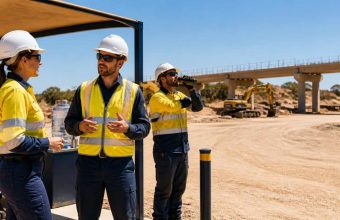
As temperatures rise across Western Australia, summer brings additional work health and safety challenges for businesses, particularly those with employees working outdoors or in environments exposed to heat.
Construction sites, mining operations, agriculture, transport, warehousing, landscaping and maintenance services can all face increased risks during the warmer months. However, heat-related risks are not limited to outdoor work. Commercial kitchens, manufacturing facilities, workshops and poorly ventilated indoor environments can also expose employees to uncomfortable and potentially dangerous conditions.
For employers, preparing for summer should be part of the organisation’s broader workplace health and safety planning. Extreme heat, ultraviolet (UV) exposure, dehydration and fatigue can affect employee health, concentration and the ability to perform work safely.
The challenge is not simply responding when temperatures become extreme. It is identifying foreseeable risks, planning appropriate controls and making sure employees and supervisors understand how to work safely throughout the warmer months.
1. Understand the risks of working in heat
Working in hot conditions places additional demands on the body. Physical activity generates heat, while high environmental temperatures and humidity can make it harder for the body to cool itself.
When workers cannot effectively regulate their body temperature, they may experience dehydration, heat cramps, heat exhaustion or heat stroke.
The level of risk depends on several factors, including:
- Air temperature and humidity.
- Direct sunlight and radiant heat.
- Physical workload and duration of exposure.
- Air movement and ventilation.
- Clothing, uniforms and personal protective equipment (PPE).
- Individual circumstances and acclimatisation.
Employers should consider the actual conditions in which work is performed rather than relying on the temperature forecast alone.
A worker undertaking heavy physical activity in direct sunlight may face considerably different risks from someone performing light duties in a shaded, ventilated environment.
Safe Work Australia also makes clear that there is no single maximum temperature at which all work must automatically stop. Risk assessments should consider the overall conditions, work intensity, exposure and available controls. Where necessary, employers should reschedule or suspend work until safer conditions can be achieved.
2. Recognise early signs of heat-related illness
Recognising symptoms early is important because heat-related illness can become serious if not addressed promptly.
Common warning signs may include:
- Excessive sweating.
- Dizziness or light-headedness.
- Headaches.
- Nausea or vomiting.
- Muscle cramps.
- Unusual tiredness or weakness.
- Fainting or confusion.
Heat stroke is a medical emergency. Signs can include altered behaviour, confusion, seizures or collapse.
If heat stroke is suspected, call Triple Zero (000) immediately, begin appropriate first aid and follow emergency medical advice. Do not delay emergency assistance while waiting for symptoms to improve.
Employers should ensure supervisors and workers know how to recognise warning signs, access first aid and report concerns.
Workers should also be encouraged to look out for colleagues, particularly those undertaking physically demanding tasks or working alone.
3. Manage outdoor work and UV exposure
Western Australia’s summer conditions can create significant risks for employees working outdoors.
Construction workers, road crews, agricultural employees, landscapers, delivery personnel and maintenance teams may spend extended periods exposed to direct sunlight.
Heat is only part of the concern. Prolonged exposure to solar ultraviolet radiation can increase the risk of skin damage and skin cancer.
Employers should consider practical measures to reduce exposure, including:
- Scheduling outdoor tasks during cooler parts of the day where reasonably practicable.
- Providing shaded areas for work and rest breaks.
- Supplying suitable protective clothing.
- Providing wide-brimmed or otherwise appropriate sun-protective hats.
- Making sunscreen readily available.
- Providing suitable sunglasses where required.
- Reviewing work arrangements during periods of high UV exposure.
Protective clothing and PPE should be suitable for the task while also considering their impact on heat retention and the body’s ability to cool down.
Workers should understand that cloudy conditions do not necessarily eliminate UV exposure. Organisations should include sun protection in their normal summer safety procedures rather than relying only on exceptionally hot days.
4. Plan work schedules around summer conditions
One of the most practical ways to reduce heat exposure is to review when and how work is performed.
Employers should consider whether physically demanding activities can be completed earlier in the morning or later in the day when conditions are cooler.
Depending on the nature of the work, other measures may include:
- Adjusting start and finish times.
- Scheduling heavy manual tasks during cooler periods.
- Reducing the duration of continuous heat exposure.
- Rotating employees between tasks where appropriate.
- Increasing opportunities for recovery in cooler environments.
- Using mechanical equipment to reduce physical exertion.
- Rescheduling or cancelling tasks where risks cannot be adequately controlled.
These decisions should be based on the specific work environment and the risks involved.
Employers should also consider whether work targets, production pressures or deadlines could discourage employees from taking necessary breaks or reporting symptoms.
A summer safety plan should support safe work practices rather than create pressure to maintain normal output regardless of conditions.
5. Provide water, shade and suitable rest arrangements
Access to cool drinking water and appropriate recovery areas is an important part of managing work in hot conditions.
Employers should ensure workers have ready access to clean drinking water and are encouraged to remain hydrated throughout their shifts.
WorkSafe WA provides practical guidance recommending that workers replace lost fluids by drinking approximately 250 ml of water every 15 to 20 minutes during hot work conditions.
Employers should also consider:
- Keeping drinking water close to the work area.
- Providing shaded or cooled rest areas.
- Ensuring employees can take additional breaks when conditions require them.
- Providing suitable ventilation, fans or air-conditioning where practicable.
- Monitoring workers who undertake prolonged or physically demanding activities.
Break arrangements should reflect the actual conditions and the nature of the work. A standard break schedule may not be sufficient when employees are exposed to prolonged or intense heat.
6. Consider indoor workers and heat-producing environments
Summer safety planning should not focus exclusively on employees working outdoors.
Indoor environments can also become hazardous when ventilation is inadequate or when workers are exposed to heat-producing machinery, equipment and processes.
Examples include:
- Commercial kitchens and food preparation areas.
- Manufacturing facilities.
- Warehouses with limited ventilation.
- Workshops and maintenance facilities.
- Roof cavities and confined work areas.
- Industrial environments with radiant heat.
Employers should identify areas where temperatures, humidity or poor airflow may affect workers.
Possible controls include improving ventilation, installing cooling systems, isolating workers from heat-producing equipment, providing mechanical assistance and adjusting work schedules.
Where work involves significant heat exposure, a more detailed assessment may be appropriate to identify the conditions and suitable control measures.
7. Consider workers who may be more vulnerable to heat
Not all workers respond to heat in the same way.
Individual circumstances, experience and acclimatisation can influence how well someone manages hot working conditions.
Employers should consider whether additional support or controls may be necessary for:
- Workers new to the job or returning after an extended absence.
- Employees undertaking physically demanding tasks.
- Workers who are not accustomed to hot conditions.
- Older workers and younger or inexperienced employees.
- Employees whose health or medication may increase their susceptibility to heat-related illness.
This should be managed respectfully and with appropriate regard for employee privacy.
Supervisors should also be alert to signs of fatigue and changes in work performance, particularly during prolonged periods of hot weather.
8. Prepare for heatwaves and changing weather conditions
A Western Australian summer can bring more than consistently high temperatures. Heatwaves, strong winds, storms, bushfire conditions and poor air quality may also affect workplace safety.
Employers should monitor relevant weather forecasts, warnings and emergency information when planning work.
During heatwave conditions, additional measures may be necessary, such as:
- Reviewing existing risk assessments.
- Rescheduling or suspending high-risk activities.
- Increasing supervision and worker check-ins.
- Reviewing outdoor work locations.
- Providing additional access to shade and cooling.
- Considering smoke exposure and reduced air quality.
- Reviewing emergency and evacuation arrangements.
Workers operating in remote locations or working alone may require additional communication and monitoring arrangements.
Employers should also ensure that employees understand when to stop work, move to a safer location and contact their supervisor or emergency services.
9. Make summer safety part of everyday WHS management
A summer safety plan should not be treated as a one-off announcement at the beginning of the season.
Employers should integrate heat and weather-related risks into their regular WHS processes.
This includes:
- Reviewing relevant workplace risk assessments.
- Consulting workers and health and safety representatives.
- Providing information and training about heat-related hazards.
- Ensuring supervisors understand their responsibilities.
- Maintaining access to water, shade and suitable facilities.
- Reviewing incidents, near misses and employee feedback.
- Checking whether existing controls remain effective as conditions change.
Under Western Australia’s Work Health and Safety Act 2020 and applicable Work Health and Safety Regulations 2022, persons conducting a business or undertaking (PCBUs) have duties to ensure, so far as is reasonably practicable, the health and safety of workers and others who may be affected by the work.
This includes identifying and managing foreseeable risks associated with working in heat.
The most effective approach is to identify risks early, consult workers and put appropriate controls in place before conditions become dangerous.
Preparing your workplace for the summer months
Summer is an important time for Western Australian businesses to review their workplace health and safety arrangements.
Heat-related illness, UV exposure, dehydration and fatigue can affect employees across a wide range of industries and working environments.
Employers who plan ahead, monitor changing conditions and provide appropriate workplace controls can reduce avoidable risks and support safer working environments.
Summer safety is not just about responding to extreme weather. It is about making sure employees have the information, equipment, supervision and support they need to work safely every day.
Need support with your workplace health and safety arrangements?
WCA Solutions works with Australian businesses to strengthen workplace compliance, improve people-management practices and support effective workforce risk management.
Contact WCA Solutions to discuss your organisation’s HR, workplace relations and compliance requirements.
Related WCA Solutions services:
- HR Consulting & Advisory
- Workplace Relations
- HR Managed Services
- Leadership Development
Free Download :
Managing Heat Stress and Outdoor Work in WA
A practical employer guide to managing heat-related risks, protecting workers and maintaining safe outdoor working conditions throughout the Western Australian summer.
Download Employer Guide (PDF) ↓
Summer WHS Risk Checklist
Use this practical checklist to review workplace heat risks, hydration, shade, rest breaks, UV exposure and emergency arrangements before and during summer operations.